
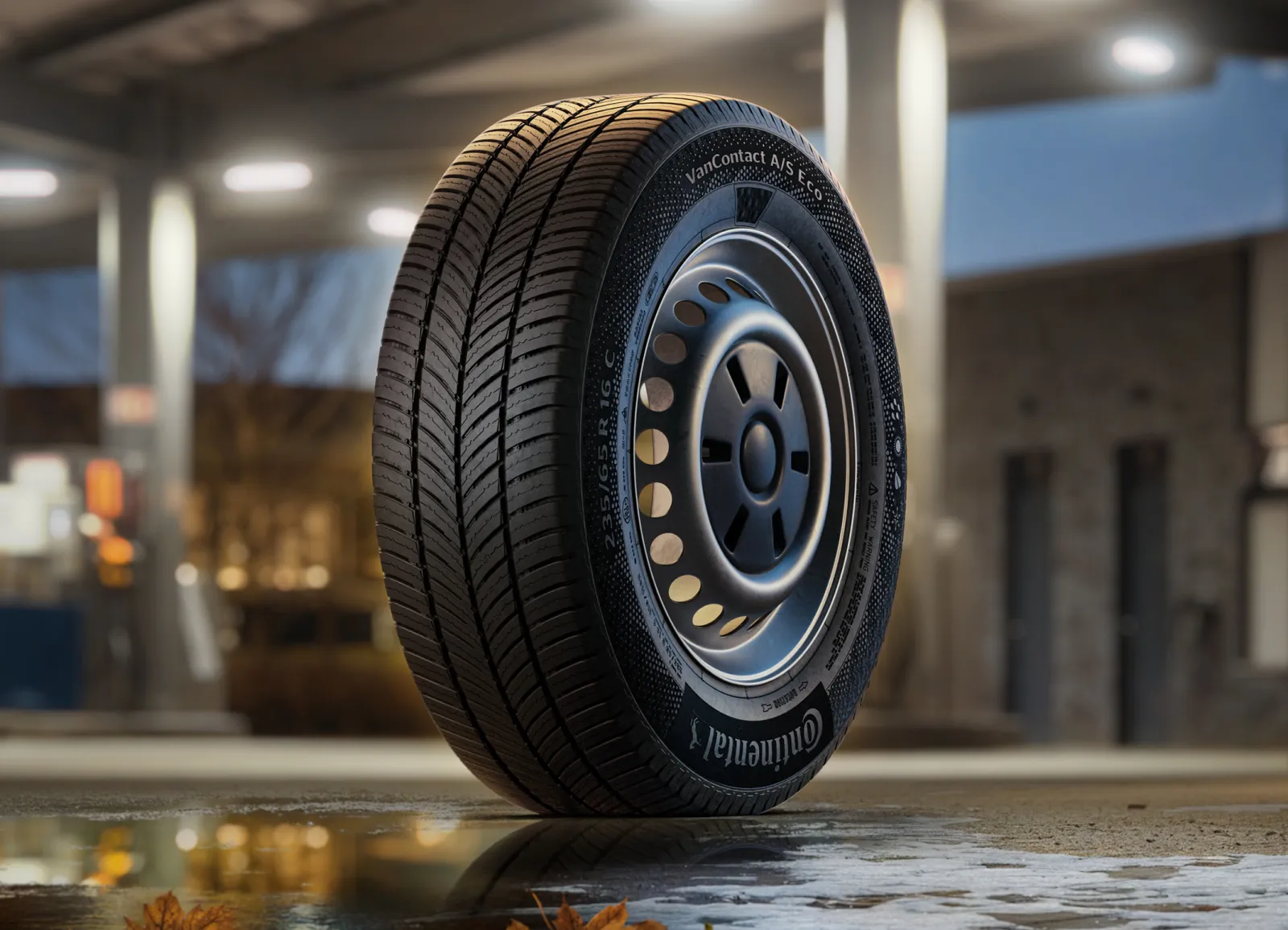
Continental introduces ContiSilent and Silent Pattern technologies to reduce tyre rolling noise for drivers, pedestrians, and residents.
Continental’s ContiSilent Technology Cuts Cabin Noise by Up to 9 Decibels
Continental has introduced a series of tread designs and acoustic technologies designed to reduce noise emissions, which, according to the World Health Organization (WHO), is Europe’s second-largest environmental health risk.
Typically, tyre noise is audible to the human ear at moderate driving speeds, from about 30 to 50 km/h up to 80 to 100 km/h, depending on various factors, such as road surface, drivetrain, tyre type, and driving style.
Tyre’s rolling noise is not the only noise that a moving vehicle generates. At lower speeds, usually engine noise is more audible, while at higher speeds, wind noise tends to dominate. However, according to a Movotiv research, the average global driving speed for daily trips is approximately 30 km/h, which means tyre rolling noise is the noise that most motorists or pedestrians hear, making it a more urgent matter to tackle.
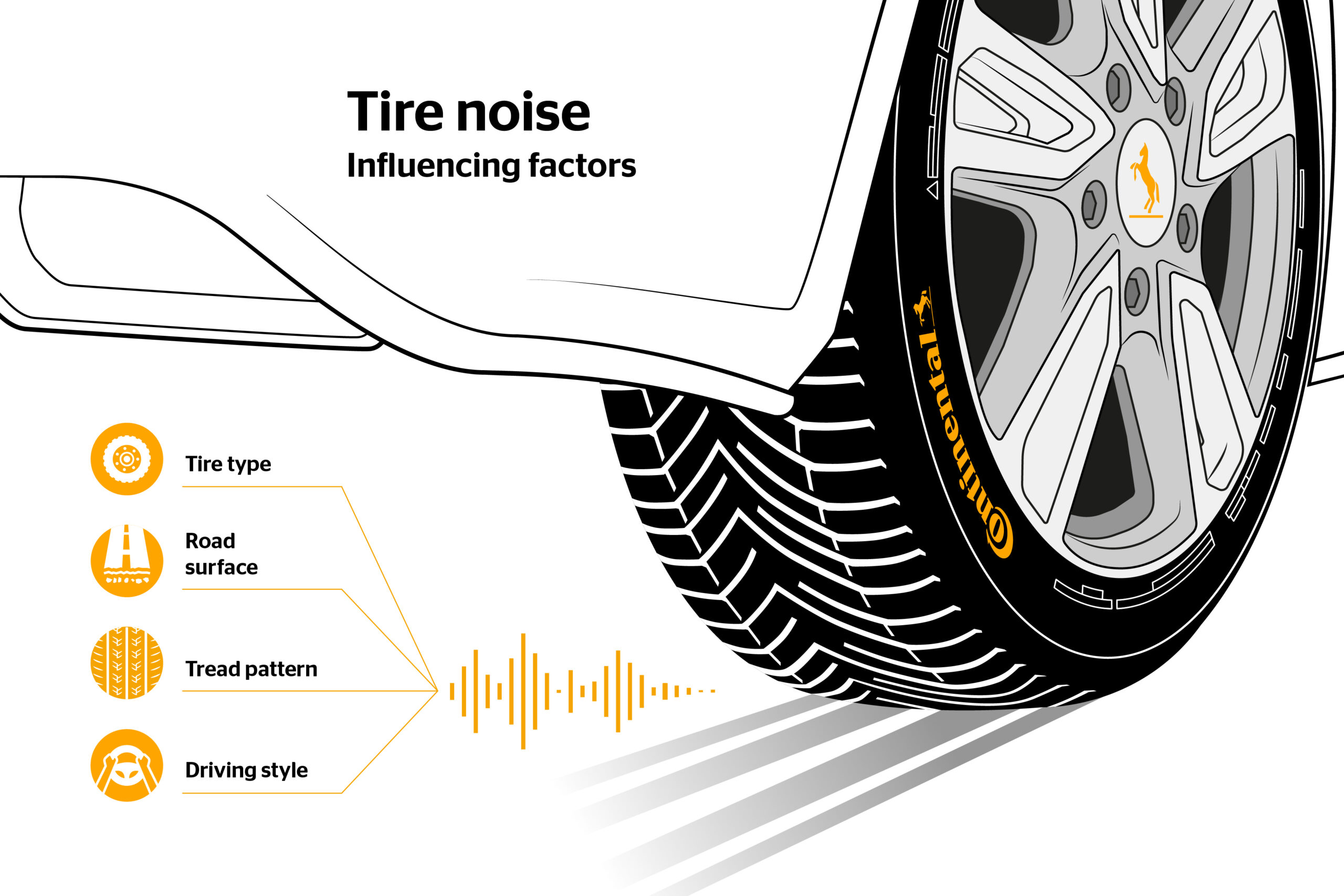
The rapid shift towards electrification further highlights the tyre rolling noise problem. The quieter electric powertrain makes tyre rolling noise more audible, especially from inside the cabin.
Achillefs Tsotras, head of Continental’s Tire-Vehicle Interaction department, described traffic noise from cars, buses, and delivery vehicles as a major burden for both people and the environment, and that is what the German company is trying to address. “With tyre technologies like ContiSilent and innovative tread designs, we are actively reducing rolling noise without compromising safety. This makes every ride noticeably quieter, benefiting drivers, pedestrians, residents and the environment alike,” he explained.
To reduce external noise levels, Continental has engineered the Silent Pattern tread, currently featured on the EcoContact 7 and EcoContact 7 S. Unlike conventional tyres with evenly spaced tread blocks that produce a continuous humming, the Silent Pattern utilises varied spacing and angles to break up regular rhythmic vibrations. This pattern is specifically tuned to cancel out noise emitted by different tread elements.
For a quieter cabin, Continental utilises its ContiSilent technology, capable of reducing noise inside the cabin by up to 9 dB. This system incorporates an ultra-light polyurethane foam applied to the inner surface of the tyre during production. This foam absorbs air vibrations inside the tyre cavity before they can be transmitted through the chassis to the interior, without compromising performance, fuel efficiency, or load capacity.
Currently, Continental is applying these technologies across several ranges, from the SportContact 7 ultra-high-performance tyre to the Conti Urban NXT designed for city buses. In the light commercial vehicle market, the VanContact A/S Eco has been tailored to meet the highest EU labelling standards, achieving an “A” rating for external rolling noise, as well as rolling resistance and wet braking.
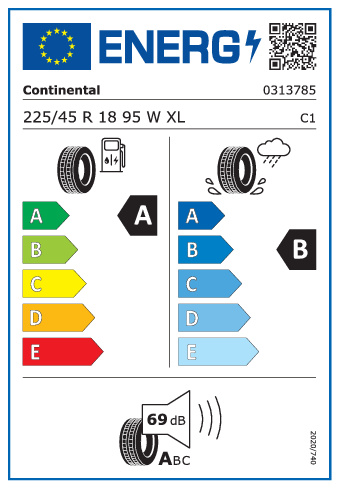
The company confirmed that customers can identify these low-noise options by checking official decibel ratings on standardised labels, such as the EU tyre label, during the purchasing process.