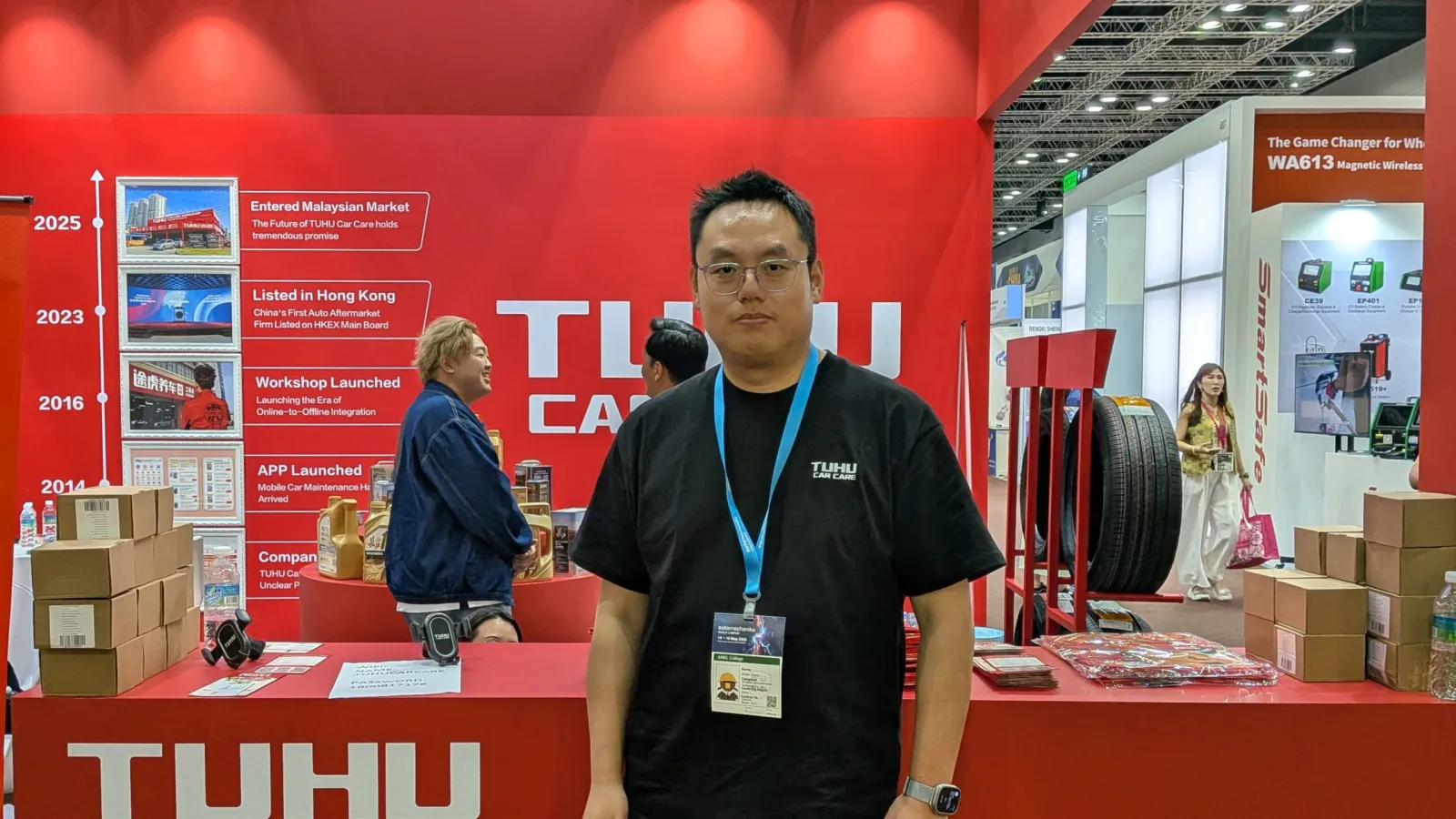
Tuhu Car Care is accelerating its expansion into Southeast Asia, with Malaysia serving as its first market in the region.
Chinese Retail Network Expands Further in Malaysia
“As one of China’s leading integrated online-to-offline automotive service platforms, Tuhu has built an extensive nationwide network covering 32 province-level regions, 324 prefecture-level cities, and 1,953 county-level administrative divisions. Today, the company operates more than 8,000 service outlets across the country. As we continue to grow domestically, future expansion would largely be focused on lower-tier cities and rural areas. Meanwhile, we are exploring opportunities beyond mainland China,” said Vincent Chen, Operating Director of AE Business Division.
Chen explained that Tuhu’s first step beyond mainland China was its entry into Hong Kong in 2024, which provided valuable experience in adapting its business model to a different market environment.
“Although Hong Kong is part of China, its regulatory framework, workshop operations, supply chains and consumer habits differ significantly from those in mainland China. Popular communication platforms such as Facebook and WhatsApp are widely used there, and traditional Chinese characters are the norm. We quickly realised that we could not simply replicate our mainland model without adjustments,” he said.
Tuhu initially set up several service outlets in Hong Kong, using the market as a testing ground to refine its overseas operating approach.
Why Malaysia?
“After gaining experience in Hong Kong, we felt more confident about expanding into Southeast Asia. Malaysia became our first destination in the region, and we continue to seek collaboration opportunities to further strengthen our presence here,” he clarified.
Explaining the decision, Chen said Tuhu evaluates market size and passenger car ownership across segments such as sedans, SUVs, and MPVs. “Malaysia has one of the largest passenger car populations in the region, at around 12 to 14 million units, followed by Thailand with 10 to 11 million and Indonesia with about 8 to 11 million,” he said.
He added that vehicle ownership density is also key factor. Citing Seasia Stats 2025, he noted that Brunei leads with 805 vehicles per 1,000 people, while Malaysia ranks second with 490 vehicles per 1,000 people. Malaysia’s lack of mandatory vehicle scrappage after a certain age, and the absence of official data on older vehicles also suggest a large and long-lasting vehicle parc, indicating strong market potential.
“We also look at infrastructure readiness, smartphone penetration, 5G network coverage, and the adoption of e-commerce and digital payments. Based on these factors, Malaysia is the most suitable first entry point for Southeast Asia,” he said.
Tuhu is currently focused on the Klang Valley, where it has established 11 service outlets. The company aims to expand nationwide in the coming phase. Penang will be among the next locations, followed by Alor Setar, Melaka, and Johor Bahru.
“Unlike traditional chain expansion models, our strategy in Malaysia is partnership-oriented. Rather than replacing independent workshops, we support local operators through digital systems, training, supply chain resources, and global brand partnerships,” he said
Chen said franchise partners are accessed based on three key criteria: manpower, financial capability, and location. Partners are expected to provide a capable management and technical team, ideally comprising eight to ten employees to support daily operations effectively. While training and operational support are provided, prior experience in the automotive service industry is preferred. Partners must also have sufficient capital investment capacity and secure a suitable workshop location.
“These are the basic operational requirements. Equally important is a shared vision. Tuhu is looking for long-term partnerships,” he said.
Franchise Partner Requirements
According to Chen, Tuhu’s franchise model delivers value in four key areas: customer traffic, online marketing support, supply chain, and digital systems.
One of the most immediate advantages for franchise partners is access to Tuhu’s established customer ecosystem. According to Chen, partner service outlets can expect to receive between eight and 10 online service orders per day, providing a steady baseline of business.
“Online marketing support is another advantage. Partners do not need to spend significant time and resources in producing TikTok or Facebook content, as Tuhu supports customer acquisition and digital promotion,” he said.
On the supply chain side, Tuhu provides consignment inventory, a full range of spare parts and access to vehicle data. By scanning a car plate number, operators can instantly identify required parts, improving efficiency and reducing errors.
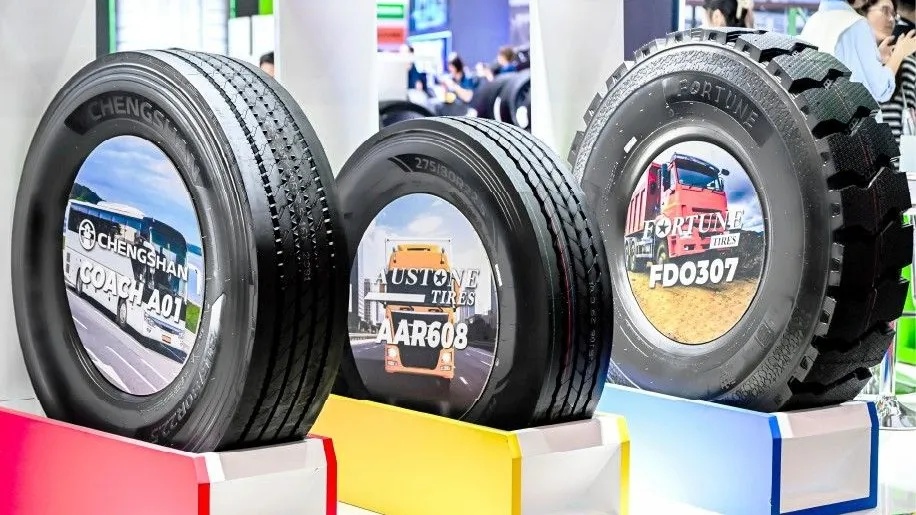
The company also collaborates with global automotive brands such as Michelin, Continental, Shell, Mobil, Bosch, Castrol, Goodyear and Bridgestone, showcased at Automechanika Kuala Lumpur 2026.
At the core of Tuhu’s business model is a fully integrated digital ecosystem that connects customers, workshops, suppliers and logistics partners. “Through our consumer app and a workshop management system, partners can improve appointment scheduling, customer engagement, inventory coordination and service standardisation,” said Chen.
The system also supports standardised operating procedures for tyres, lubricants, batteries and general servicing, improving consistency, transparency and customer confidence.
For workshop operators, Chen said, the platform enables inventory optimisation, digital order processing, centralised procurement, customer traffic aggregation, technician workflow standardisation and service transparency.
He emphasised that these solutions are designed to strengthen the long-term operational capabilities of local workshops while allowing them to retain their own business identity and customer relationships.
Training is provided to all new partners to ensure they understand Tuhu’s systems and Standard Operating Procedures (SOPs) requirement. For example, tyre installation requires technicians to upload a cross-check video before completion.
“We cannot rely solely on manual supervision. Digital tools ensure every process is properly documented and standards are followed,” Chen said.
Future priorities
Chen revealed that most franchise partners come from the automotive aftermarket industry. Some operate multiple workshops and convert one outlet into a Tuhu franchise to leverage its digital and supply chain ecosystem.
“Tuhu positions itself as a one-stop automotive servicing solution provider. Focusing only on tyres is highly competitive,” he said.
The company’s services include routine maintenance such as oil and filter changes, tyre replacement, mechanical repairs, car detailing, paint protection film (PPF), and at larger outlets, even car wash services. All services are managed via the app to ensure transparent pricing and seamless booking.
“Tuhu is also adapting its operations to Malaysia’s multicultural environment, driving habits and market conditions while strengthening local support capabilities. We believe the automotive aftermarket will become increasingly connected, standardised and service-driven. Our goal is to grow alongside local partners and contribute to the long-term development of Malaysia’s automotive service ecosystem,” he said.
Moving forward, Chen pointed out that the company’s key priorities include expanding workshop partnerships, strengthening logistics capabilities, enhancing technician training and digitalisation, deepening collaboration with global brands and improving customer experience through digital connectivity.